Frequently Asked Questions
What steps are involved in asbestos abatement removal?
Asbestos Abatement Removal: Essential Steps for Safe Property Management
Asbestos abatement removal represents a critical safety process that property owners must address when dealing with hazardous building materials. Professional removal services follow strict regulatory protocols to protect occupants and workers from dangerous fibre exposure. Moreover, proper abatement ensures compliance with the Control of Asbestos Regulations 2012, preventing costly legal penalties and health risks.
Property developers and commercial owners face significant responsibilities when managing buildings constructed before 1980. Furthermore, residential properties often contain asbestos-containing materials (ACMs) in textured coatings, insulation boards, and cement products. What steps are involved in asbestos abatement removal?
Initial Assessment and Survey Requirements
Comprehensive Property Inspection
Licensed surveyors conduct thorough inspections to identify all asbestos-containing materials throughout the property. Professional teams examine accessible areas systematically, documenting location, condition, and potential risk levels. Additionally, intrusive surveys may be required for refurbishment or demolition projects to locate hidden ACMs within wall cavities and structural elements.
Key inspection elements include:
- Visual assessment of suspect materials
- Bulk sampling for laboratory analysis
- Condition rating and risk evaluation
- Detailed photographic documentation
- Comprehensive reporting with annotated plans
Risk Assessment and Planning
Qualified professionals evaluate the likelihood of fibre release based on material condition and planned activities. Subsequently, they develop detailed management plans outlining control measures, removal methods, and safety protocols. Therefore, this assessment determines whether licensed contractors are required for high-risk friable asbestos or if non-licensed methods suffice for lower-risk materials.
Essential planning considerations encompass:
- Material type and friability assessment
- Exposure risk calculations
- Regulatory compliance requirements
- Contractor licensing verification
- Emergency response procedures
Preparation and Safety Protocols
Containment and Isolation Measures
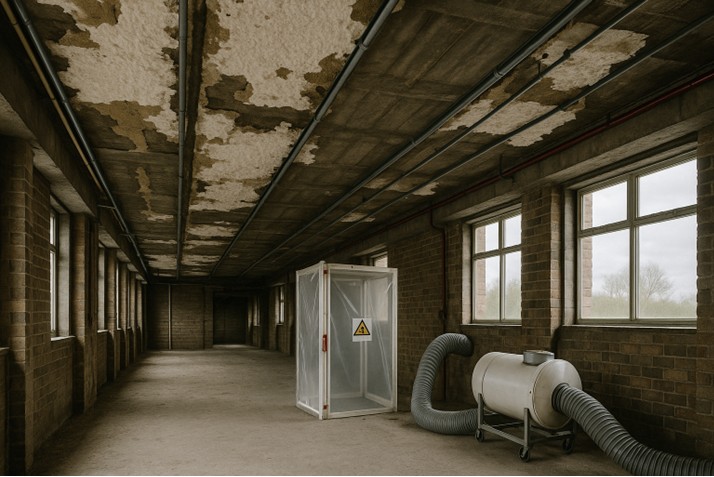
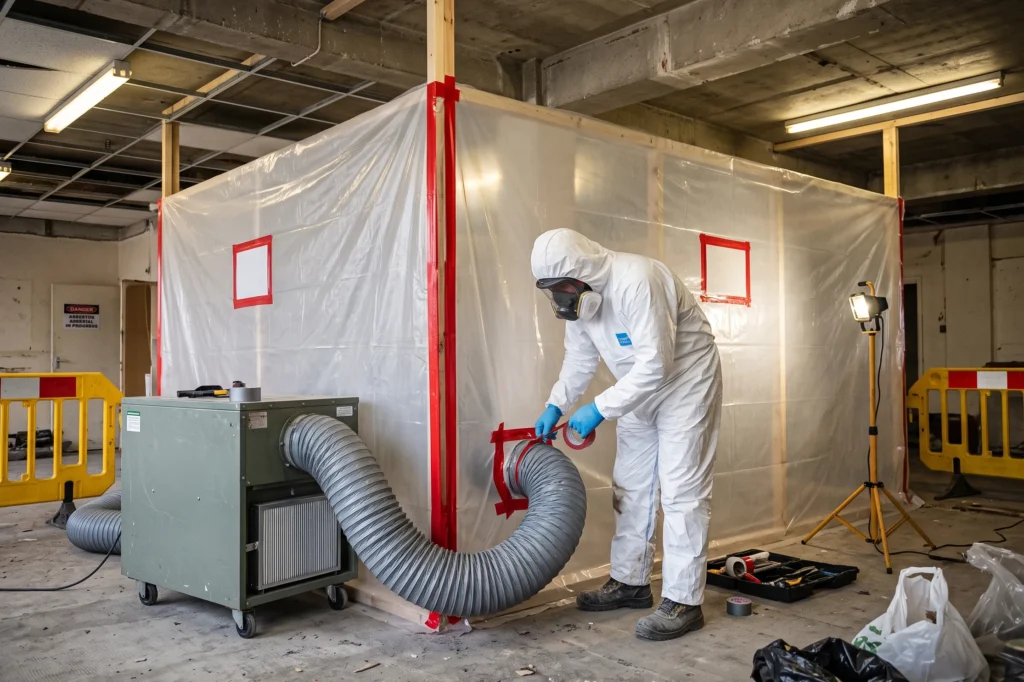
Professional teams establish sealed enclosures using specialist polythene sheeting and negative pressure units before commencing asbestos abatement removal. These containment systems prevent fibre migration to adjacent areas whilst maintaining controlled working environments. Furthermore, decontamination units provide essential washing facilities for personnel and equipment transitioning between contaminated and clean areas.
Critical containment features include:
- Double-sealed polythene barriers
- Negative pressure ventilation systems
- Three-stage decontamination units
- Air monitoring equipment
- Emergency shutdown procedures
Personal Protective Equipment
All operatives wear appropriate respiratory protective equipment rated for asbestos exposure during removal activities. Additionally, disposable coveralls, gloves, and boot covers prevent contamination transfer. Therefore, powered air-purifying respirators or supplied-air systems provide essential protection against inhalation of dangerous fibres.
Standard protective equipment comprises:
- P3-rated respiratory protection
- Disposable protective suits
- Impermeable gloves and footwear
- Eye protection and safety helmets
- Emergency escape breathing apparatus
Removal and Clearance Procedures
Safe Removal Techniques
Licensed contractors employ wet-working methods to suppress fibre release during asbestos abatement removal processes. Consequently, materials are carefully removed using hand tools and specialist techniques that minimise disturbance. Moreover, all waste is double-bagged immediately and labelled according to hazardous waste regulations before secure disposal at licensed facilities.
Approved removal methods involve:
- Continuous wetting of materials
- Hand-stripping techniques
- Immediate waste packaging
- Controlled demolition procedures
- Progressive cleaning protocols
Four-Stage Clearance Testing
Independent analysts conduct comprehensive air monitoring following the four-stage clearance procedure mandated by HSE guidelines. Initially, visual inspections verify complete removal and thorough cleaning. Subsequently, air sampling demonstrates that fibre concentrations remain below regulatory limits before reoccupation approval.
Clearance stages encompass:
- Pre-cleaning visual inspection
- Thorough wet cleaning procedures
- Comprehensive air monitoring
- Final visual clearance certification
- Independent analytical verification
Asbestos Surveys
Management, refurbishment, and demolition surveys for all property types.
Asbestos Removal
Safe, certified removal of asbestos materials in line with HSE guidelines.
Summary
Asbestos abatement removal requires meticulous planning, specialist expertise, and strict adherence to safety protocols throughout every stage. Professional contractors ensure regulatory compliance whilst protecting property occupants and surrounding communities from exposure risks. Therefore, engaging qualified removal specialists provides essential peace of mind for property owners managing these hazardous materials.
Successful removal projects depend on comprehensive surveys, proper containment measures, and rigorous clearance procedures. Furthermore, licensed contractors possess the necessary training, equipment, and experience to handle complex asbestos abatement removal safely and efficiently. Consequently, professional management ensures long-term property safety and legal compliance.
Request Free Consultation
asbestos abatement removal
UK asbestos abatement removal
asbestos abatement removal
UK asbestos abatement removal
Share This Article

Ora Asbestos Management Ltd
Unit A9, Seedbed Centre,
Shoeburyness, Southend-on-Sea SS3 9QY..