4 Stage Asbestos Clearance for Reoccupation
Commercial remediation projects need firm proof of environmental safety before contractors remove containment barriers. A 4 stage asbestos clearance supplies that statutory verification. It declares a work area fit for standard occupation once licensable removal work ends. The Control of Asbestos Regulations 2012 underpin this assessment. It confirms that airborne fibres cannot migrate into adjacent premises. This protects maintenance staff, office workers, and incoming trades from long-term respiratory risks.
Dutyholders often face delays or unexpected costs when enclosures fail initial inspections during refits. Knowing the technical criteria applied at each stage helps estate managers audit contractor handovers properly. How does this framework protect building occupants, and what physical standards must an enclosure meet before analysts sign a certificate of reoccupation?
Key Takeaways
- A four stage clearance asbestos assessment remains a mandatory statutory process for licensable works under the Control of Asbestos Regulations 2012.
- Independent analysts accredited by UKAS must conduct all four stages without commercial influence from the removal contractor or building dutyholder.
- Stage two demands an exhaustive visual inspection of every surface using high-powered lighting, inspection mirrors, and tactile testing for dust.
- Air monitoring in stage three requires aggressive disturbance to challenge airborne concentrations against the clearance indicator threshold of 0.01 fibres per millilitre.
- Dutyholders must retain the final certificate of reoccupation alongside health records and management plans for at least forty years under statutory rules.
Clearance Criteria Across Four Verification Phases
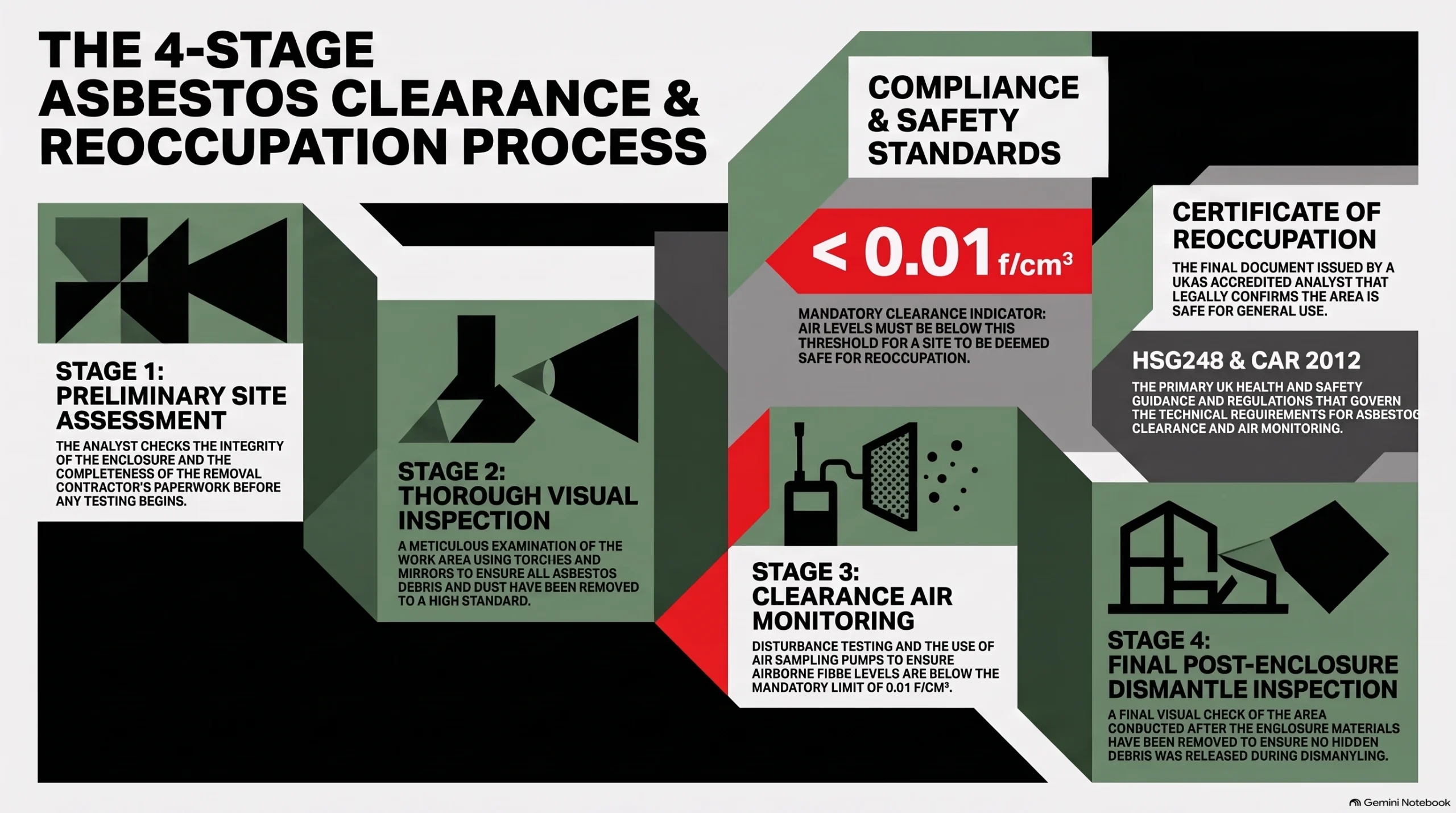
The HSG248 clearance process follows an uncompromising sequence. Each phase acts as an absolute hold point, designed to prevent premature dismantling of containment measures. If an enclosure fails any step, the analytical team halts progress immediately. Remediation contractors must reclean the area before testing restarts from defined points.
Estate managers should review the technical milestones that govern this statutory protocol. The table below sets out the core requirements, verification activities, and passing criteria for each stage. It applies across the full clearance procedure, right through to formal reoccupation.
| Clearance Phase | Core Focus | Passing Criteria |
|---|---|---|
| Stage 1 | Preliminary site and enclosure check | Intact containment, correct negative pressure, clean waste routes |
| Stage 2 | Intensive visual examination | Complete absence of asbestos dust, debris, and cleaning residue |
| Stage 3 | Clearance air monitoring | Fibre concentration below the clearance indicator of 0.01 f/cm³ |
| Stage 4 | Post-dismantling assessment | Clean transit routes, absence of trapped dust beneath polythene |
Statutory Sign-Off Duties Under CAR 2012
Statutory Obligations Under Control of Asbestos Regulations 2012
Regulation 19 and Regulation 20 of CAR 2012 mandate thorough environmental validation after licensable removal work. Employers and dutyholders must confirm that airborne fibre levels sit safely below statutory thresholds. This check happens before anyone removes the containment barriers. It applies to every licensable project, regardless of site size.
This obligation links directly to the dutyholder duties under Regulation 4. Commercial property directors must show active control over building risks. Passive visual checks prove insufficient once contractors disturb high-risk products such as asbestos insulating board or sprayed limpet coating. The law requires a formal certificate of reoccupation. Allowing staff or secondary trades into the remediated zone without that document breaches health and safety law. It is treated as a criminal offence.
Independent Analytical Verification Mandated by HSG248
HSE guidance document HSG248 sets out strict requirements for analytical competence and organisational independence. Surveying and analytical firms that deliver clearance services must hold accreditation from the United Kingdom Accreditation Service. This accreditation must cover both ISO/IEC 17020 and ISO/IEC 17025 standards. Without it, an organisation cannot issue a valid certificate.
The updated second edition of HSG248 eliminates conflicts of interest by reinforcing analytical independence. Removal contractors cannot directly employ the clearance analyst. Instead, the building owner or designated client dutyholder must commission the testing organisation directly. This contractual separation prevents commercial deadlines from compromising analytical integrity. Analysts maintain statutory authority to fail sub-standard containment sites without risk of commercial penalties from remediation teams.
Site Preparation and Preliminary Inspection
Documentation Verification and Scope Evaluation
Stage one initiates the assessment through a thorough review of administrative documentation, licences, and method statements. The independent analyst reviews the contractor plan of work, waste consignment records, and daily handover logs. This establishes that agreed scopes were completed accurately.
The analyst examines the site boundary before setting foot within the containment zone. This includes auditing transit paths, hazardous waste holding stores, and operative decontamination facilities. Waste must sit sealed in approved polythene packaging, with all external bags wiped clean. If paperwork reveals discrepancies in the volume of asbestos removed, stage one fails immediately. The same applies where records expose unnotified deviations from the work plan. Physical enclosure checks do not begin until these gaps are resolved.
Structural Integrity of Containment Enclosures
Inspectors examine the physical stability of the polythene enclosure to confirm continuous isolation during testing. The analyst verifies that negative pressure units maintain correct differential pressure across the enclosure boundary. This ensures that air flows inward from the surrounding spaces at all times.
Differential pressure monitors must show an active reading, typically within the range of 0.05 to 0.15 millibars. Smoke testing tubes verify that viewing flaps, airlock flap doors, and bag-out ports pull air inward. No external leakage should occur at any of these points. The analyst also inspects negative-pressure pre-filters to verify they operate without mechanical bypass. Any structural breach or tear in the containment membrane results in an immediate failure, requiring repairs and re-inspection.
Did You Know?
HSG248 requires air monitoring to run long enough to reach a limit of detection below 0.01 fibres per millilitre. This typically demands at least 480 litres of sampled air per filter membrane.
Thorough Visual Inspection Standards
Systematic Search Techniques for Residues
Stage two represents the most meticulous physical stage of the 4 stage asbestos clearance. The analyst conducts a forensic, zone-by-zone visual search inside the enclosure. This confirms the complete removal of all specified asbestos materials and fine dust. No area of the enclosure is exempt from this scrutiny.
Qualified inspectors enter the sealed enclosure equipped with full respiratory protective equipment and disposable overalls. The analyst uses high-output inspection lamps held at oblique angles. This lights up rough brickwork, timber battens, pipe brackets, and structural steel flanges. The second edition of HSG248 requires minimum inspection times based on the physical dimensions of the area. Analysts cannot rush this process. They examine every surface, using inspection mirrors to view concealed junctions behind service brackets and cable trays.
Tactile Testing and Common Failure Points
Analysts supplement visual inspection with tactile tests across horizontal and vertical containment surfaces. The inspector wipes dry, unsoiled cloths or darkened wipes across treated substrates, structural timbers, and polythene sheeting. This detects transparent sealants or lingering particulates that a visual check alone might miss.
Enclosures frequently fail stage two due to preventable cleaning errors. Contractors often overlook fine dust settling on top of temporary containment timber frames, light fittings, and scaffold tubes. Sealant overspray applied to bare surfaces before visual sign-off also triggers a failure. Sealants can encapsulate uncleaned loose fibres, hiding contamination from the analyst. All surfaces must remain bare, clean, and dry until visual clearance sign-off is granted.
Detailed ACM condition checks and regulatory compliance reports.
Airborne Fibre Testing and Analysis
Aggressive Air Sampling Protocols
Stage three commences only after the analyst signs off the visual inspection. Inspectors then employ aggressive disturbance techniques, using brush sweeps or mechanical air movers. This lifts settled respirable particles into suspension during the sampling period. The technique deliberately mimics future construction activity in the space.
Static air sampling in undisturbed rooms provides false confidence. Respirable asbestos fibres settle slowly onto flat surfaces due to their microscopic aerodynamic diameter. Analysts use battery-powered pumps or clean brushes to agitate floors, ledges, and structural elements before sampling pumps run. This agitation replicates the physical disturbance of future construction tasks. Pumps then sample measured air volumes through conductive cowls holding twenty-five-millimetre cellulose nitrate membrane filters.
Phase Contrast Optical Microscopy Thresholds
Air sample analysis takes place on-site inside a purpose-built mobile laboratory using Phase Contrast Optical Microscopy. The analyst mounts cleared filter segments onto glass slides. Acetone vapour and triacetin then clear the membrane matrix for optical evaluation. This process must happen swiftly to preserve sample integrity.
The analyst counts fibres longer than five micrometres with aspect ratios equal to or exceeding three to one. To pass the clearance indicator, calculated airborne fibre concentrations must fall below 0.01 fibres per millilitre of air. If the count reaches or exceeds this threshold, stage three fails. The remediation team must enter the enclosure, re-vacuum all surfaces, and repeat the sampling procedure from the beginning.
Management, refurbishment, and demolition surveys for all property types.
Post-Enclosure Dismantling Assessment
Controlled Enclosure Teardown Verification
Stage four takes place only after the enclosure passes stage three air monitoring. Remediation contractors carefully dismantle the polythene containment and bag the sheeting as contaminated waste. They isolate the negative-pressure units under the watchful eye of the analytical team. Every step happens in a set, controlled sequence.
Dismantling represents a vulnerable phase in any remediation programme. Dust trapped behind polythene barriers or behind structural battens can discharge into adjacent building zones if handled carelessly. Contractors must fold polythene sheets inward and seal them inside heavy-gauge waste sacks before removal from the work zone. Operatives run negative-pressure equipment during teardown until final isolation occurs. This maintains negative pressure control throughout the structural strip-out.
Final Visual Sign-Off of Reopened Spaces
The analyst carries out a final visual walk-through once the remediation team clears all timber framing and warning tape. Every trace of polythene must also be removed before this walk-through begins. The survey confirms that previously inaccessible surfaces are completely free from building dust and structural debris.
Inspectors pay close attention to perimeter skirtings, floor junctions, and surfaces that sat beneath polythene anchoring battens. The analyst also re-examines the primary transit routes between the enclosure location and the external waste collection skip. If the operative pathway displays dropped waste or surface scuffs, the contractor must damp-wipe the route. Only then can the analyst sign the final release documentation.
Asbestos Removal
Safe, certified removal of asbestos materials in line with HSE guidelines.
Documentation and Certificate of Reoccupation
Anatomy of the Reoccupation Certificate
The Certificate of Reoccupation serves as the definitive legal proof of project completion and site safety. This multi-page document records photographic evidence, inspection timings, and analytical data. It also carries formal signatures verifying every distinct phase of the verification process. Without these signatures, the certificate carries no legal weight.
A valid certificate contains specific information mandated by HSG248. It records the name and UKAS accreditation number of the analytical laboratory. It also lists full site address details, sampling equipment calibration logs, and exact filter flow rates. The analyst must include high-resolution, date-stamped photographs showing the cleared work area, negative pressure readouts, and sampling pump positions. Any missing photographic records or analytical omissions invalidate the certificate during subsequent safety audits.
Statutory Record Keeping for Dutyholders
Building managers must archive the certificate of reoccupation within the centralised site asbestos management register. Under CAR 2012 Regulation 22, dutyholders and employers must retain environmental monitoring records. Clearance records must be kept for a minimum of forty years. This applies regardless of the size of the original project.
This long-term retention framework protects organisations against future occupational illness claims. Asbestos-related conditions, such as mesothelioma and pleural thickening, typically present clinically decades after initial exposure. Maintaining a complete record of clearance certificates, contractor plans of work, and air-testing logs matters for this reason. It proves that the organisation maintained safe environmental standards during refurbishment or demolition projects.
Resolving Site Clearance Failures
Investigating Root Causes of Contamination
Enclosure failures require structured investigation rather than hasty re-cleaning. An area can fail either visual inspection or air testing. When this happens, the analyst and contractor supervisor must identify why contamination remains. It may sit on structural surfaces or within the air column itself.
Common causes include degraded negative-pressure HEPA filters, air bypass around poorly taped enclosure margins, or inadequate cleaning of rough surfaces. In some instances, vibration from adjacent factory operations or ongoing construction trades dislodges historic dust settled inside high-level voids. Identifying the precise origin of residual fibres allows the remediation team to apply targeted corrections. This prevents repetitive cycles of failed air testing and costly programme overruns.
Contractual and Programme Risk Management
Failed clearances trigger significant commercial disruption, delaying incoming fit-out trades, commissioning teams, and tenancy start dates. Project managers must account for analytical failure protocols within every subcontract. This means allocating explicit responsibility for delay damages and repeat testing fees before work even starts.
Remediation subcontracts must clearly state who carries the financial liability for re-testing charges resulting from failed inspections. When contractors cut cleaning schedules to meet tight project handovers, visual inspection failures cause immediate work stops. Allowing adequate settling periods helps prevent this outcome. Using modern high-efficiency vacuum units and running preliminary in-house air checks also reduces risk. Together, these steps help the workspace pass the formal four stage clearance asbestos process on the first analytical attempt.
Final Thoughts
A compliant 4 stage asbestos clearance protects building owners, contractors, and future occupants. It guards against the severe health hazards linked to airborne respirable fibres. The standards set out in HSG248 ensure forensic cleaning, structural isolation, aggressive air testing, and a final visual appraisal. This disciplined approach removes the guesswork from commercial refurbishments. It converts contaminated spaces into safe environments, ready for productive use.
Dutyholders must continue prioritising independent analytical procurement. This maintains legal compliance and commercial transparency across future demolition or maintenance works. Building realistic inspection timelines into the master construction schedule prevents operational bottlenecks, whilst still ensuring robust documentation. Respecting the thorough nature of statutory clearance protocols helps organisations maintain pristine compliance files. It also safeguards site personnel and upholds the highest environmental safety standards across the commercial property sector.
Submit Enquiry
Frequently Asked Questions
Under HSG248 guidance, the building dutyholder or ultimate client must employ the analytical company directly. Asbestos removal contractors must not hire the air-monitoring analyst. Direct commercial engagement removes conflicts of interest, ensuring that analytical teams maintain absolute independence when assessing enclosure cleanliness. This independence lets analysts fail a sub-standard enclosure without fear of commercial pressure from the contractor. Dutyholders should confirm this reporting line in writing before work begins, so responsibility for procurement is clear from the outset.
Timescales depend on enclosure volume, complexity, and internal surface finishes. A small domestic or single-room commercial enclosure generally requires three to five hours from start to finish. Large industrial areas with complex steelwork, high ceilings, or multiple service penetrations can require a full day or more. Analysts must observe mandatory minimum inspection times under HSG248 to complete visual checks thoroughly, regardless of project deadlines. Booking the analyst early, once removal work nears completion, helps avoid unnecessary delays to the wider construction programme.
If air samples show fibre levels at or above 0.01 fibres per millilitre, stage three fails immediately. The removal contractor must re-enter the containment enclosure wearing full protective equipment. Operatives reclean all internal surfaces using damp wiping and HEPA vacuums. The analyst then carries out a secondary visual inspection before initiating a completely new round of aggressive air sampling. This full restart applies even where only one small area triggered the failure. The entire enclosure must demonstrate compliance together.
The formal four-stage process is legally mandated only for licensable asbestos operations carried out within sealed enclosures. However, non-licensable and notifiable non-licensable projects still require confirmation of cleanliness. Analysts frequently perform visual inspections and reassurance air monitoring for these lower-risk projects. This provides dutyholders with formal documentation that work areas were left safe and clean. Many dutyholders choose this reassurance testing voluntarily, even where the regulations do not strictly demand it. It supports their own due diligence records.
The clearance indicator threshold is set at 0.01 fibres per millilitre of air (0.01 f/cm³). This figure represents the practical limit of quantification for phase-contrast optical microscopy carried out on-site. The clearance indicator is not an acceptable exposure standard for ongoing occupation. Instead, it serves as a scientific benchmark, demonstrating that the contractor cleaned the enclosure to the lowest practicable level. Dutyholders should never confuse this clearance figure with the workplace exposure limits set out in EH40/2005. The two serve entirely different regulatory purposes.

Ora Asbestos Management Ltd
Unit A9, Seedbed Centre,
Shoeburyness, Southend-on-Sea SS3 9QY..
About the Author
Gordon Ringland is the founder, Director and principal asbestos surveyor at Ora. He holds the BOHS P402 qualification — the recognised industry standard for surveying and sampling strategies for asbestos in buildings — awarded by the British Occupational Hygiene Society (BOHS) Faculty of Occupational Hygiene (Certificate No. 20140911-32845-4254).
Gordon has over 12 years of hands-on experience in the asbestos industry, built on more than 20 years working in roofing. He carries out all three main survey types — management surveys, R&D surveys and re-inspections — and designs the sampling strategies used to find asbestos-containing materials (ACMs). He also leads non-licensed asbestos removal projects.
His work spans the full range of buildings, from residential garages and family homes to large commercial sites. Gordon has particular experience in heritage and museum environments, including listed buildings, where careful, fully compliant work matters most. He oversees Ora’s survey work and is the named author of our asbestos guides.