Effective Asbestos Risk Assessment.
An asbestos risk assessment serves as the foundation for protecting occupants and workers from potentially dangerous asbestos-containing materials (ACMs) in buildings constructed before 1980. This systematic evaluation process identifies the location, condition, and potential for disturbance of asbestos materials, enabling property owners to implement appropriate management strategies. Furthermore, conducting a thorough assessment ensures compliance with the Control of Asbestos Regulations 2012 (CAR 2012), which mandates that dutyholders identify and manage asbestos risks in non-domestic premises.
Property managers, building owners, and contractors must recognise that an effective asbestos risk assessment goes beyond simple identification of materials. Moreover, the process requires detailed documentation of findings, condition assessments, and risk ratings that inform ongoing management decisions. The assessment must also consider factors such as accessibility, likelihood of disturbance, and the friability of materials to determine appropriate control measures. How can you ensure your property assessment meets regulatory requirements whilst protecting everyone who enters the building?
Key Takeaways
- Regulatory compliance under CAR 2012 requires systematic asbestos risk assessment and ongoing management planning
- Effective survey strategy combines desk-based research with systematic visual inspection and representative sampling
- Material identification requires competent surveyors using appropriate techniques and UKAS-accredited laboratory analysis
- Condition assessment and risk rating prioritise management actions based on material condition and disturbance likelihood
- Comprehensive documentation through asbestos registers and management plans supports informed decision-making
- Regular monitoring and review procedures ensure continued effectiveness of control measures and regulatory compliance
Regulatory Requirements and Legal Obligations
Control of Asbestos Regulations 2012 Compliance
The Control of Asbestos Regulations 2012 establishes the legal framework for asbestos risk assessment in the UK. Additionally, Regulation 4 places a “duty to manage” on dutyholders, requiring them to identify asbestos-containing materials and assess their condition regularly. Property owners must maintain an up-to-date asbestos register and implement a written management plan that outlines control measures and review procedures.
Dutyholder Responsibilities and Enforcement
Dutyholders face significant penalties for non-compliance, including unlimited fines and potential custodial sentences. Consequently, the Health and Safety Executive (HSE) can issue prohibition notices that immediately halt operations if adequate controls are not in place. Building owners must ensure that all staff likely to disturb ACMs receive appropriate training and that contractors are provided with current asbestos registers before commencing work.
Survey Strategy and Planning
Desk-Based Research and Historical Analysis
Effective asbestos risk assessment begins with comprehensive desk-based research examining building records, previous survey reports, and maintenance logs. Furthermore, reviewing architectural drawings and construction dates helps identify areas of likely asbestos use, such as boiler rooms, service risers, and areas with sprayed coatings. This preliminary analysis enables surveyors to develop targeted inspection strategies that maximise efficiency whilst ensuring comprehensive coverage of high-risk areas.
Access Planning and Health and Safety Considerations
Proper planning requires coordination with site managers to arrange safe access to all areas requiring inspection. Moreover, surveyors must identify potential hazards such as live electrical services, confined spaces, or structural instability that could affect the assessment process. The planning phase should include permit-to-work arrangements, scaffolding requirements, and emergency procedures to ensure surveyor safety throughout the inspection.
Management, refurbishment, and demolition surveys for all property types.
Material Identification and Sampling
Visual Inspection Techniques and Documentation
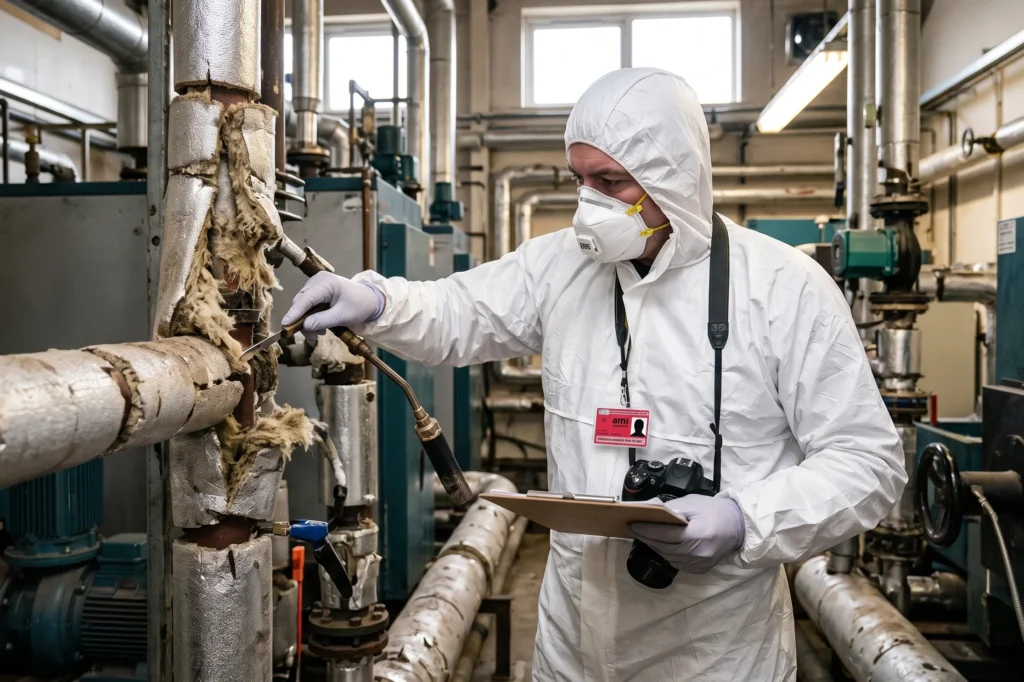
Systematic visual inspection forms the cornerstone of effective asbestos risk assessment, requiring surveyors to examine all accessible areas methodically. Additionally, experienced surveyors use knowledge of typical asbestos applications to identify suspect materials such as textured coatings, pipe insulation, and cement products. Each suspected ACM must be photographed, measured, and recorded with precise location details to ensure accurate register entries and future reference.
Bulk Sampling Protocols and Laboratory Analysis
Representative bulk sampling of suspect materials provides definitive identification through accredited laboratory analysis using polarised light microscopy (PLM). Consequently, samples must be collected using appropriate personal protective equipment and sealed in labelled containers with clear chain-of-custody documentation. UKAS-accredited laboratories following ISO/IEC 17025 standards ensure reliable identification results that support informed management decisions.
Condition Assessment and Risk Rating
Material Condition Evaluation Criteria
Condition assessment evaluates the surface integrity and potential for fibre release from identified asbestos-containing materials. Moreover, surveyors must consider factors such as damage, deterioration, surface treatment, and exposure to air currents that could affect material stability. The assessment typically uses a scoring system that rates materials as good, fair, or poor condition, directly influencing the overall risk rating and required management actions.
Risk Prioritisation and Scoring Systems
Risk rating combines material condition with the likelihood of disturbance to determine priority levels for management action. Furthermore, factors such as accessibility, building use patterns, and planned maintenance activities influence the probability of future disturbance. High-risk materials require immediate attention, whilst low-risk items may only need periodic monitoring, enabling property owners to allocate resources effectively based on actual risk levels.
Management Planning and Documentation
Asbestos Register Creation and Maintenance
The asbestos register serves as the central repository for all assessment findings, including material locations, types, conditions, and risk ratings. Additionally, the register must include clear plans showing ACM locations, photographic records, and sampling results to support ongoing management decisions. Regular updates following re-inspections, removal works, or building modifications ensure the register remains current and reliable for future reference.
Written Management Plan Development
A comprehensive management plan outlines procedures for managing identified asbestos risks, including roles and responsibilities, control measures, and communication protocols. Consequently, the plan must detail inspection frequencies, contractor briefing procedures, and emergency response arrangements for accidental disturbance. The management plan should also specify review intervals and update procedures to ensure continued effectiveness as building uses or conditions change.
Monitoring and Review Procedures
Periodic Re-inspection Requirements
Regular re-inspection of identified ACMs ensures continued monitoring of material condition and effectiveness of control measures. Moreover, CAR 2012 requires annual reviews as a minimum, though higher-risk materials may need more frequent assessment depending on their condition and exposure potential. Re-inspection findings must be documented and compared with previous assessments to identify any deterioration trends requiring management action.
Management Plan Updates and Continuous Improvement
Effective asbestos risk assessment requires ongoing refinement based on operational experience, regulatory changes, and building modifications. Furthermore, management plans should incorporate lessons learned from incidents, near-misses, or control measure failures to improve future performance. Regular stakeholder feedback from building users, contractors, and maintenance staff helps identify gaps in current procedures and opportunities for enhancement.
Professional Competence and Quality Assurance
Surveyor Qualifications and Training Requirements
Competent asbestos risk assessment requires surveyors with appropriate qualifications such as BOHS P402 certification plus substantial practical experience. Additionally, survey organisations should maintain UKAS accreditation to ISO/IEC 17020 to demonstrate technical competence and independence. Ongoing professional development ensures surveyors remain current with regulatory changes, industry best practices, and emerging assessment technologies.
Quality Control and Validation Procedures
Robust quality assurance systems ensure consistent assessment standards through peer review, field audits, and standardised reporting procedures. Consequently, organisations should implement internal quality checks including re-inspection of sample surveys and desktop review of all reports before issue. Regular participation in proficiency testing schemes and external audits validates assessment accuracy and maintains professional credibility with clients and regulators.
Asbestos Removal
Safe, certified removal of asbestos materials in line with HSE guidelines.
Conclusion
Effective asbestos risk assessment requires systematic application of regulatory requirements, technical expertise, and quality assurance procedures to protect building occupants and workers. The process must combine thorough material identification with accurate condition assessment and risk rating to support informed management decisions. Property owners who invest in comprehensive asbestos risk assessment demonstrate their commitment to health and safety whilst ensuring regulatory compliance and protecting their business interests.
Successful assessment programmes require ongoing commitment to monitoring, review, and continuous improvement as building conditions and regulatory requirements evolve. Furthermore, engaging competent professionals with appropriate qualifications and experience ensures reliable results that support effective long-term asbestos management. Property owners should view asbestos risk assessment as an essential investment in building safety rather than merely a regulatory compliance exercise.
Request Consultation
asbestos risk assessment
Essex asbestos risk assessment
asbestos risk assessment
Essex asbestos risk assessment
Frequently Asked Questions
What qualifications should an asbestos surveyor possess for conducting risk assessments?
Professional asbestos risk assessment requires surveyors with BOHS P402 certification combined with a minimum of six months supervised practical experience under competent mentorship. Additionally, survey organisations should ideally maintain UKAS accreditation to ISO/IEC 17020, demonstrating technical competence and operational independence. This accreditation validates that assessment procedures meet recognised international standards for inspection bodies.
Furthermore, competent surveyors must demonstrate comprehensive knowledge of building construction methods, typical asbestos applications, and current regulatory requirements under CAR 2012. Ongoing professional development through refresher training and industry updates ensures surveyors maintain current expertise. Therefore, property owners should verify surveyor credentials and organisational accreditation before commissioning asbestos risk assessment services.
How often should asbestos-containing materials be re-inspected following the initial assessment?
The Control of Asbestos Regulations 2012 mandates annual re-inspection of identified asbestos-containing materials as the minimum legal requirement for ongoing management. However, materials in poor condition or high-risk locations may require more frequent monitoring, potentially every six months or quarterly depending on specific circumstances. The initial asbestos risk assessment should establish appropriate re-inspection frequencies based on material condition and disturbance likelihood.
Moreover, significant building modifications, maintenance activities, or accidental damage may trigger additional inspections outside the scheduled programme. Building managers should document all re-inspection findings and compare results with previous assessments to identify deterioration trends. Consequently, any changes in material condition must be reflected in updated asbestos registers and management plans to maintain effective control measures.
What documentation must be maintained following completion of an asbestos risk assessment?
Comprehensive documentation from asbestos risk assessment must include a detailed asbestos register recording all identified materials with locations, types, conditions, and risk ratings. Additionally, the assessment report should contain methodology details, sampling results, annotated building plans, and photographic evidence of all suspected and confirmed ACMs. Laboratory certificates from UKAS-accredited facilities provide definitive material identification supporting register entries.
Furthermore, property owners must maintain a written management plan detailing control measures, responsibilities, and procedures for managing identified asbestos risks. The plan should include emergency procedures, contractor briefing protocols, and review schedules ensuring continued effectiveness. Therefore, all documentation must be readily accessible to building users, maintenance staff, and contractors whilst being retained for the required statutory periods under current regulations.
Can building owners conduct their own asbestos risk assessments or must they use external consultants?
Building owners may legally conduct their own asbestos risk assessment provided they possess appropriate competence, qualifications, and technical knowledge equivalent to professional surveyors. However, the complexity of material identification, sampling techniques, and regulatory requirements typically necessitates specialist expertise that most property owners lack. Self-assessment also raises potential conflicts of interest regarding objectivity and thoroughness of the evaluation process.
Moreover, professional asbestos risk assessment provides independent validation of findings and compliance with recognised industry standards that support defensible management decisions. Insurance considerations and liability issues often favour using qualified external consultants with appropriate professional indemnity cover. Consequently, whilst self-assessment remains legally permissible, engaging competent professionals typically provides superior outcomes and reduced business risk for property owners.
What immediate actions are required if damaged asbestos materials are discovered during assessment?
Discovery of damaged asbestos-containing materials during risk assessment requires immediate implementation of control measures to prevent fibre release and protect building occupants. Initially, the affected area should be isolated using temporary barriers and warning signs whilst restricting access to essential personnel only. Additionally, any activities that could further disturb the damaged material must cease immediately until appropriate remedial measures are implemented.
asbestos risk assessment
Essex asbestos risk assessment
asbestos risk assessment
Essex asbestos risk assessment

Ora Asbestos Management Ltd
Unit A9, Seedbed Centre,
Shoeburyness, Southend-on-Sea SS3 9QY..