
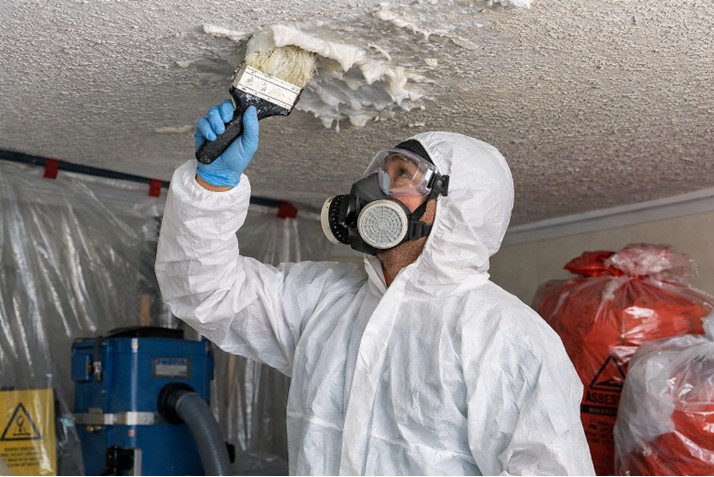
Artex Removal: Removing an Artex Ceiling Safely.
Professional artex removal is a critical requirement for UK properties built or refurbished before the year 2000. Textured coatings applied during this period frequently contain chrysotile asbestos, and any disturbance must be managed under strict safety protocols to prevent the release of hazardous respirable fibres and fulfil obligations under the Control of Asbestos Regulations 2012.
The presence of asbestos in decorative coatings presents a unique challenge for homeowners and commercial dutyholders alike. While the material is typically non-friable when intact, the process of removing an artex ceiling can easily liberate respirable fibres if incorrect methods are employed. Are you confident that your contractor has the training, equipment, and regulatory knowledge to protect your property and its occupants?
Key Takeaways
- The distinction between non-licensed “Asbestos Essentials” work and fully licensed removal under CAR 2012, and when each classification applies.
- The specific benefits of using X-Tex or gel-based chemical removal methods to suppress respirable fibres during the stripping process.
- Compliance requirements under the Control of Asbestos Regulations 2012, including plan of work documentation and HSE notification obligations.
- The mandatory use of RPE and high-efficiency particulate air (HEPA) filtration to protect operatives throughout the removal process.
- Post-removal clearance procedures, including air monitoring and visual inspection, to confirm the environment is safe for re-occupation.
Classify Your Work: Licensed vs Non-Licensed Artex Removal
Distinguish Asbestos Essentials from Licensed Work
The removal of textured coatings is typically classified as non-licensed work under the Control of Asbestos Regulations 2012, provided the material is not significantly degraded. This classification, often managed through “Asbestos Essentials” guidance, applies when the total area is small and the work does not involve high-intensity fibre release or friable insulation board.
For most domestic settings, removing an artex ceiling falls under non-licensed work, but it still requires operatives to be fully trained and equipped with the correct personal protective equipment (PPE). However, if the coating is applied to asbestos insulating board (AIB), the work may escalate to a licensed requirement, necessitating a 14-day notification to the Health and Safety Executive (HSE).
Fulfil Dutyholder Responsibilities for Textured Coatings
Regulation 4 of CAR 2012 dictates that the dutyholder must identify and record the location and condition of all asbestos-containing materials within non-domestic premises. Even in residential settings, ensuring a management survey is conducted before artex removal protects both the occupants and any contractors engaged for the refurbishment works.
Failure to correctly identify the material before commencing work can lead to accidental exposure and significant legal liability. A refurbishment and demolition survey is often required for intrusive works to ensure every instance of asbestos, including that hidden beneath layers of modern plaster, is documented in the asbestos register.
| Feature | Non-Licensed (Textured Coatings) | Licensed Work (Sprayed Coatings/AIB) |
|---|---|---|
| HSE Notification | Not required for most coatings. | Mandatory 14-day notification. |
| Enclosure Requirement | Standard polythene drop sheets. | Full negative-pressure enclosure. |
| Training Level | Non-licensed asbestos task training. | Specialist licensed operative training. |
| Waste Disposal | Double-bagged hazardous waste. | Strictly controlled hazardous disposal. |
asbestos floor tile removal
UK asbestos floor tile removal
Expert asbestos floor tile removal
Ora asbestos floor tile removal

Apply Chemical Removal Techniques Safely and Effectively
Apply X-Tex and Gel Methods Correctly
X-Tex and similar gel-based products provide a safer alternative to mechanical scraping by keeping the asbestos-containing material wet throughout the process. These gels penetrate the coating, breaking the bond with the substrate and allowing the material to be removed as a damp slurry, which significantly reduces the risk of airborne fibre release.
When removing an artex ceiling using chemical gels, the product is applied liberally to the surface and left to dwell for a specified period. Once the coating has softened, it is carefully scraped away and collected directly into heavy-duty polythene waste bags. This wet method is the industry benchmark for maintaining fibre concentrations well below the 0.1 f/ml control limit.
Choose Wet Stripping Methods for Safer Artex Removal
Wet stripping methods are preferred because they eliminate the dust associated with traditional sanding or dry scraping techniques. By maintaining the moisture content of the artex, the respirable fibres remain trapped within the gel, ensuring that personal and area air monitoring results remain within safe parameters during the project.
This approach also minimises the need for aggressive mechanical tools that could damage the underlying plasterboard or masonry. Using chemical gels ensures the artex removal process is thorough, leaving a clean surface that requires minimal preparation before re-skimming or decoration, provided the substrate is confirmed to be free of residual fibres.
Management, refurbishment, and demolition surveys for all property types.
Meet Regulatory Compliance Under CAR 2012
Adhere to the Control of Asbestos Regulations 2012
All work involving asbestos in the UK must adhere to the Control of Asbestos Regulations 2012 to ensure the health of workers and the public. This legal framework requires a formal plan of work (PoW) to be drafted before any disturbance of artex occurs, detailing the scope, control measures, and emergency procedures.
A comprehensive risk assessment is the foundation of any artex removal project. This assessment must consider the friability of the material, the proximity of occupants, and the effectiveness of the proposed controls, such as H-class vacuum cleaners and specified respiratory protective equipment (RPE) like P3-rated masks.
Document Your Plan of Work on Site
Regulation 7 requires that any work disturbing asbestos must be documented in a written plan of work that remains on-site throughout the project. This document serves as a blueprint for safety, outlining the specific wet-removal methods used and the decontamination procedures for personnel and equipment.
The plan of work must be communicated to all staff involved in the artex removal process to ensure a consistent approach to safety. Proper documentation not only ensures legal compliance but also provides a clear audit trail for dutyholders and property owners regarding the safe management of hazardous materials.
asbestos floor tile removal
UK asbestos floor tile removal
Expert asbestos floor tile removal
Ora asbestos floor tile removal
Detailed ACM condition checks and regulatory compliance reports.
Select the Correct Safety Equipment and Personal Protection
Select the Correct Respiratory Protective Equipment
Respiratory protective equipment (RPE) is mandatory for any operative involved in the removal of asbestos-containing materials to prevent the inhalation of respirable fibres. For non-licensed tasks like removing an artex ceiling, a minimum of a half-mask with P3 filters is required, though powered respirators offer higher protection factors.
All RPE users must hold a valid face-fit test certificate to ensure the mask provides an airtight seal against the face. Furthermore, operatives must be clean-shaven in the seal area, as even minor stubble can compromise the integrity of the protection, potentially leading to asbestos exposure during the removal process.
Wear Protective Clothing and Follow Decontamination Protocols
In addition to respirators, operatives must wear disposable Type 5/6 overalls and boot covers to prevent the spread of asbestos fibres on clothing. These garments are designed to be discarded as hazardous waste at the end of each shift or upon leaving the work zone to ensure containment is maintained.
Personal decontamination is a vital step in the artex removal workflow, involving the careful removal of protective clothing and the cleaning of RPE. This process prevents the “hitchhiking” of fibres into clean areas of the property, ensuring that the risk of secondary exposure to other occupants is eliminated.
Monitor Air Quality Throughout the Removal Process
Conduct Area Air Monitoring Throughout the Project
Air monitoring is conducted during and after asbestos work to verify that control measures are effective and that fibre levels remain below the 0.1 f/ml control limit. While not always a strict legal requirement for all non-licensed artex removal, it provides essential reassurance to property owners that the space is safe.
Operational monitoring involves taking static air samples near the work zone to detect any leaks in the containment. If levels approach the operational warning limit of 0.01 f/ml, work must stop immediately to review the application of wet-removal methods and the integrity of the drop-sheets.
Execute the Four-Stage Clearance Process
For licensed works, a four-stage clearance is mandatory, but a modified version is often employed for high-specification non-licensed artex ceiling removal to confirm cleanliness. This involves a thorough visual inspection of the area followed by air sampling to ensure respirable fibre counts are at or below the limit of detection.
Once the clearance is passed, the area can be declared safe for re-occupation by unprotected individuals. This process provides the final validation that the artex removal has been conducted to the highest professional standards, protecting the long-term health of the building’s occupants and future maintenance staff.
asbestos floor tile removal
Expert asbestos floor tile removal
Professional asbestos floor tile removal
Ora asbestos floor tile removal
Asbestos Removal
Safe, certified removal of asbestos materials in line with HSE guidelines.
Handle and Dispose of Asbestos Waste Correctly
Package Asbestos Waste Securely for Transit
All asbestos waste generated during the artex removal process must be securely packaged to prevent environmental contamination during transit to a licensed disposal facility. This material, including the scraped artex slurry and contaminated polythene sheeting, must be double-bagged in UN-approved heavy-duty bags clearly labelled with asbestos hazard warnings.
The inner bag should be sealed with a “gooseneck” tie before being placed into the outer bag, which is then similarly sealed. This redundant packaging ensures that even if one layer is punctured, the hazardous artex ceiling removal debris remains contained until it reaches a licensed disposal facility.
Complete Consignment Notes and Arrange Legal Disposal
All asbestos waste must be transported by a licensed carrier and disposed of at a facility authorised to accept hazardous materials. A waste consignment note must be completed and retained by the dutyholder for a minimum of three years to prove that the waste was handled legally.
Illegally dumping asbestos or failing to maintain proper waste records can lead to significant fines and prosecution. Ensuring that your artex removal contractor provides the necessary consignment documentation is a critical step in fulfilling your environmental and legal obligations as a property owner or manager.
Survey the Site Before Any Structural Alteration
Differentiate Between Survey Types Before Works Begin
Before any intrusive works begin, a refurbishment and demolition (R&D) survey must be performed to locate all asbestos-containing materials within the project scope. Unlike a management survey, an R&D survey is fully intrusive and may involve destructive inspection to find artex hidden behind false ceilings or modern coverings.
This survey ensures that when removing an artex ceiling, the team is aware of any other ACMs, such as asbestos insulating board (AIB) packers or thermal insulation, that might be disturbed. Identifying these risks early prevents project delays and ensures that the correct removal methodology and work classification are applied from the outset.
Commission Laboratory Analysis for Definitive Results
Bulk sampling and laboratory analysis are the only definitive ways to confirm the presence of asbestos in textured coatings. Samples must be analysed by a UKAS-accredited laboratory using polarised light microscopy (PLM) to identify the specific fibre types, such as chrysotile, which was commonly used in Artex.
Accurate laboratory results allow for a more precise risk assessment and plan of work. If a material is presumed to contain asbestos without testing, it must be treated as the highest risk category, potentially increasing the cost and complexity of the artex removal project unnecessarily.
Verify Professional Standards and Operative Competence
Verify Surveyor and Operative Training Standards
Operatives performing artex removal must demonstrate competence through recognised training and practical experience. This includes understanding the specific hazards of textured coatings, the correct use of RPE, and the application of wet-removal techniques like the X-Tex method to ensure safe outcomes.
Continuous professional development (CPD) and regular refresher training are essential to stay updated on regulatory changes and emerging best practices. Choosing a contractor with a proven track record in artex ceiling removal ensures that the work is performed with the necessary care and technical expertise.
Demand Quality Assurance and UKAS Accreditation
Using a firm that adheres to ISO/IEC 17020 or 17025 standards provides an additional layer of quality assurance for the client. These accreditations verify that the surveying and analytical processes are independent, impartial, and technically robust, ensuring that the results of your asbestos check are defensible and accurate.
A commitment to high quality management, including internal audits and peer reviews of survey reports, distinguishes leading asbestos management companies. This focus on excellence protects the dutyholder from the risks of non-compliance and ensures that all artex removal activities are conducted with the utmost regard for safety.
Did You Know?
Under the Control of Asbestos Regulations 2012 (CAR 2012), the removal of textured coatings (Artex) is generally classified as non-licensed work, provided the total area is less than 20 m² and the material is not significantly degraded, though it still requires specific training and controls.
Conclusion
Safe artex removal requires a combination of rigorous risk assessment, specialised equipment, and adherence to the legal frameworks established by CAR 2012. Whether you are managing a domestic renovation or a large-scale commercial project, understanding the distinction between licensed and non-licensed work is the first step toward a successful and safe outcome.
By employing modern wet-stripping techniques and ensuring all artex ceiling removal is validated through professional air monitoring and visual inspection, you can protect the health of your occupants and the integrity of your property. Professional asbestos management is not just a regulatory hurdle; it is a vital investment in safety and peace of mind.
Submit Enquiry
asbestos floor tile removal
dispose of asbestos tiles
asbestos floor tile removal
vinyl asbestos tile removal
Frequently Asked Questions
A:
Not all textured coatings contain asbestos, but those applied before 1999 are highly likely to contain chrysotile (white asbestos). The only way to confirm the presence of asbestos is through bulk sampling and analysis by a UKAS-accredited laboratory.
A:
While non-licensed work can technically be performed by homeowners, it is strongly discouraged due to the significant health risks. Professional artex removal ensures that the material is kept wet, the environment is contained, and all waste is disposed of legally, preventing household contamination.
A:
X-Tex is a gel-based removal product that keeps the asbestos fibres damp, preventing them from becoming airborne. This method is far safer than dry scraping or sanding and often leaves the underlying substrate in a better condition for re-decorating.
A:
The timeline depends on the area to be treated and the method used. Generally, a single room can be completed in a day, including the application of gels, the removal process, and the final cleaning and inspection of the work area.
A:
While not a strict legal requirement for all non-licensed tasks, air monitoring is highly recommended for reassurance. It provides evidence that the removal techniques were effective and that the room is safe for re-occupation without respiratory protection.
asbestos floor tile removal
dispose of asbestos tiles
asbestos floor tile removal
UK asbestos floor tile removal

Ora Asbestos Management Ltd
Unit A9, Seedbed Centre,
Shoeburyness, Southend-on-Sea SS3 9QY..

