Asbestos Abatement Regulations in the UK.
Property owners and developers face complex responsibilities when managing asbestos-containing materials in buildings. Furthermore, asbestos abatement regulations provide essential frameworks that protect workers and occupants whilst ensuring legal compliance across all building types. Additionally, UK asbestos abatement laws establish clear procedures for identification, assessment, and safe removal of these hazardous materials through specialists like Ora Asbestos Management.
Nevertheless, understanding these comprehensive requirements enables property professionals to maintain safe environments and avoid costly enforcement action. Moreover, partnering with experienced specialists like Ora Asbestos Management ensures compliance with current legislation whilst protecting your investment. What specific steps must you take to meet your legal obligations under current asbestos legislation?
Key Takeaways
- The Control of Asbestos Regulations 2012 establishes comprehensive asbestos abatement regulations for all UK property types
- Dutyholders must identify materials, maintain registers, and implement management plans under UK asbestos abatement laws
- Management and refurbishment surveys require qualified surveyors following HSG264 guidance standards
- Licensed work needs HSE-approved contractors whilst non-licensed activities require appropriate training and controls
- Air monitoring and four-stage clearance procedures verify safe completion of removal activities
- Training requirements vary by work type with regular refresher courses maintaining competence levels
- Ora Asbestos Management provides specialist expertise for compliance with all regulatory requirements
Understanding the Legal Framework
Core Regulatory Requirements
The Control of Asbestos Regulations 2012 (CAR 2012) forms the foundation of asbestos abatement regulations in the UK. Therefore, these regulations implement European Directive 2009/148/EC and establish minimum protection standards for all asbestos-related work. Additionally, the Approved Code of Practice L143 provides practical guidance on managing and working with asbestos materials.
Subsequently, Northern Ireland operates under parallel legislation through the Control of Asbestos Regulations (Northern Ireland) 2012. However, both jurisdictions maintain identical core requirements for dutyholder responsibilities and safety procedures. Furthermore, these UK asbestos abatement laws apply to all non-domestic premises and common areas of residential buildings.
Dutyholder Responsibilities
Property owners, landlords, and maintenance managers bear primary responsibility for asbestos management under current legislation. Consequently, dutyholders must identify asbestos-containing materials, assess their condition, and implement appropriate control measures. Nevertheless, these obligations extend to anyone with responsibility for building maintenance or occupancy decisions.
Moreover, Ora Asbestos Management assists property professionals in understanding their specific duties and developing compliant management strategies. Additionally, failure to meet these requirements can result in unlimited fines and imprisonment for serious breaches. Therefore, professional guidance ensures comprehensive compliance with all applicable asbestos abatement regulations.
Duty to Manage Requirements
Identification and Assessment Obligations
Regulation 4 of CAR 2012 requires dutyholders to locate and record all asbestos-containing materials within their buildings. Furthermore, this process involves conducting management surveys in accessible areas and presuming asbestos presence where identification proves impossible without damage. Additionally, comprehensive condition assessments must evaluate the likelihood of disturbance and potential for fibre release.
Subsequently, these findings must be documented in a central asbestos register that records location, extent, type, and condition of each material. Nevertheless, regular updates ensure the register remains accurate following any building modifications or material removal. Moreover, UK asbestos abatement laws mandate annual reviews of all registered materials to monitor condition changes.
Management Plan Development
Property owners must prepare detailed written management plans that outline roles, responsibilities, and control measures for identified asbestos materials. Therefore, these plans specify communication strategies for contractors and employees who may encounter asbestos during routine activities. Additionally, the document must detail review intervals and procedures for updating the register following building changes.
Furthermore, Ora Asbestos Management provides expertise in developing comprehensive management plans that meet regulatory requirements whilst remaining practical for day-to-day operations. However, these plans must be implemented immediately and reviewed whenever building uses change or new materials are discovered. Subsequently, effective management plans reduce liability exposure whilst ensuring ongoing compliance with asbestos abatement regulations.
Management, refurbishment, and demolition surveys for all property types.
Survey Requirements and Procedures
Management Survey Standards
Management surveys establish the location, type, and condition of asbestos-containing materials likely to be disturbed during normal occupancy or maintenance activities. Additionally, these inspections cover all readily accessible areas whilst avoiding unnecessary damage to building fabric. Nevertheless, areas not inspected must be clearly documented with presumptions of asbestos presence where doubt exists.
Moreover, qualified surveyors must possess BOHS P402 certification plus six months of supervised field experience to ensure competent material identification. Furthermore, UK asbestos abatement laws require representative bulk sampling of suspect materials for laboratory analysis by UKAS-accredited facilities. Therefore, accurate identification forms the foundation of all subsequent management decisions.
Refurbishment and Demolition Surveys
Before structural alterations or demolition work, intrusive surveys must locate all asbestos-containing materials including those concealed within building fabric. Subsequently, these comprehensive inspections may require destructive investigation to access hidden voids and service areas. Additionally, the survey scope must precisely match the extent of planned works to ensure no materials are overlooked.
Furthermore, Ora Asbestos Management conducts thorough refurbishment surveys that provide clear guidance for contractors and enable accurate cost planning. However, these surveys must be completed before any work commences that could disturb building materials. Therefore, early survey completion prevents project delays whilst ensuring compliance with asbestos abatement regulations throughout the construction process.
Work Classification and Licensing
Licensed Work Requirements
High-risk activities involving friable asbestos materials require HSE-issued licences and strict procedural controls. Therefore, licensed work includes most activities with sprayed coatings, loose insulation, and asbestos insulation board removal. Additionally, licensed contractors must notify HSE via the ASB5 system before commencing any regulated activities.
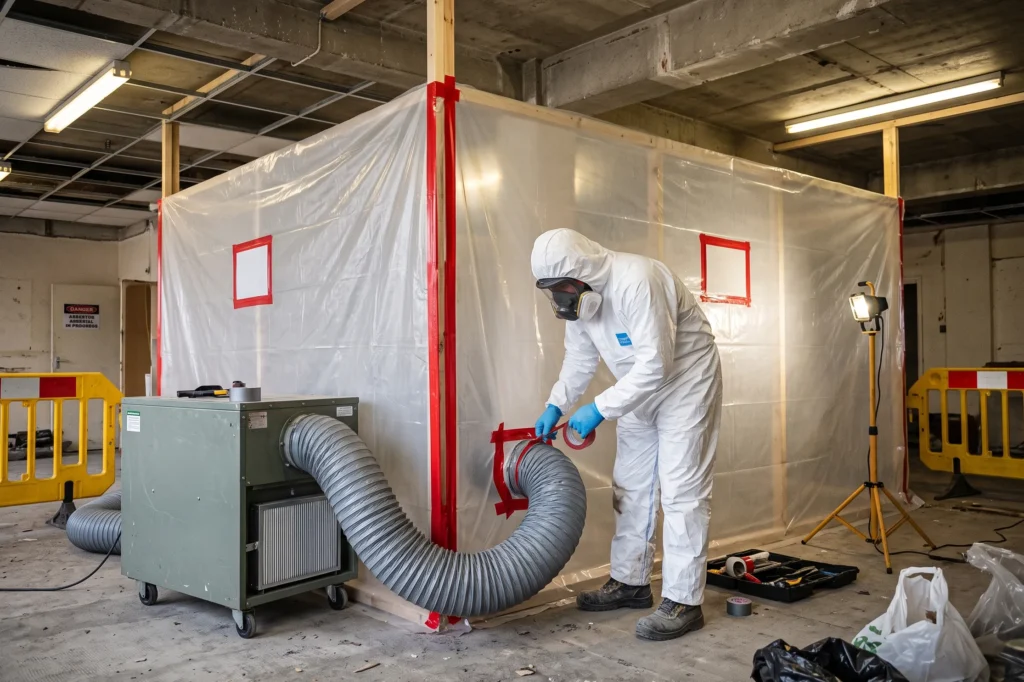
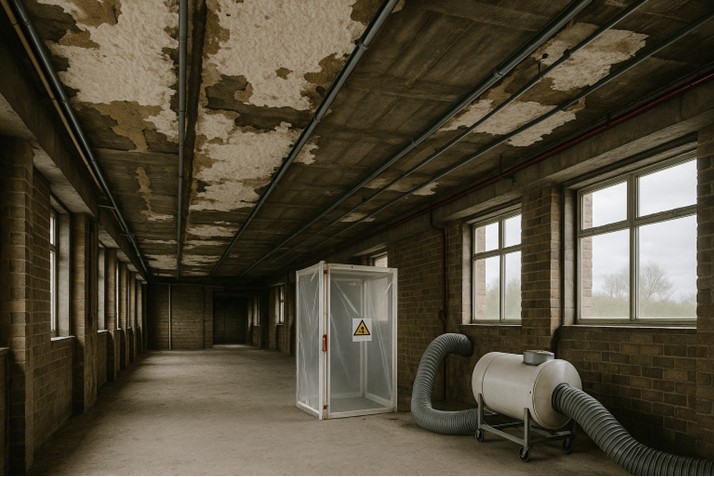
Subsequently, these operations require fully sealed enclosures, negative-pressure units, and comprehensive decontamination procedures to prevent fibre release. Moreover, UK asbestos abatement laws mandate independent air monitoring and four-stage clearance testing before areas can be reoccupied. Furthermore, only licensed specialists possess the expertise and equipment necessary for safe completion of high-risk removal work.
Non-Licensed Work Categories
Lower-risk activities with non-friable materials can be undertaken using approved asbestos essentials methods without formal licensing requirements. Nevertheless, some tasks become Notifiable Non-Licensed Work (NNLW) requiring notification, medical surveillance, and detailed record-keeping. Additionally, employers must assess each activity against HSE criteria to determine the appropriate classification.
However, even non-licensed work requires comprehensive planning, appropriate training, and strict adherence to control measures outlined in approved guidance. Furthermore, Ora Asbestos Management provides expert classification advice to ensure work is categorised correctly and undertaken with appropriate controls. Therefore, proper classification protects workers whilst avoiding unnecessary regulatory burden for straightforward activities.
Air Monitoring and Clearance Procedures
Monitoring Requirements During Work
Asbestos abatement regulations mandate air monitoring to verify control measure effectiveness and protect personnel during removal activities. Additionally, background monitoring establishes ambient fibre levels before work commences whilst operational monitoring detects any containment breaches. Furthermore, personal monitoring ensures individual exposure remains below the 0.1 fibres per cubic centimetre control limit.
Subsequently, monitoring frequency varies with work type but licensed activities require at least daily sampling with immediate action if results approach action levels. Moreover, all monitoring must be conducted by competent personnel using calibrated equipment and UKAS-accredited analytical services. Therefore, rigorous monitoring protocols demonstrate compliance whilst protecting worker health throughout removal operations.
Four-Stage Clearance Process
UK asbestos abatement laws require comprehensive clearance testing before areas can be reoccupied following asbestos removal work. Therefore, this process begins with pre-cleaning visual inspection to verify complete material removal and surface preparation. Additionally, thorough cleaning using HEPA filtration and wet-wiping methods removes any residual contamination.
Furthermore, air monitoring within enclosures must demonstrate fibre concentrations below 0.01 fibres per cubic centimetre before barriers can be removed. Subsequently, final visual inspection by competent assessors confirms surface cleanliness and absence of visible debris. Moreover, Ora Asbestos Management coordinates independent clearance testing to ensure impartial verification of successful decontamination before reoccupation.
Training and Competence Requirements
Personnel Training Standards
All individuals liable to disturb asbestos materials must receive appropriate training matched to their work activities and exposure risks. Therefore, training ranges from basic awareness for general maintenance staff to comprehensive courses for licensed removal operatives. Additionally, UK asbestos abatement laws specify minimum training content and refresher intervals to maintain competence.
Furthermore, non-licensed workers require asbestos essentials training updated every two years whilst licensed operatives need formal reassessment every three years. However, employers must maintain detailed training records and ensure personnel understand their specific roles and responsibilities. Subsequently, competent supervision ensures safe working practices whilst protecting both workers and building occupants.
Specialist Qualifications
Surveyors and analysts require specialist qualifications to ensure accurate material identification and risk assessment. Therefore, surveyors must complete BOHS P402 certification plus supervised field experience under competent mentors. Additionally, organisations should maintain UKAS accreditation to ISO/IEC 17020 to demonstrate technical competence and impartiality.
Moreover, Ora Asbestos Management employs fully qualified surveyors and maintains rigorous quality assurance procedures to ensure reliable service delivery. Furthermore, continuous professional development ensures personnel remain current with regulatory changes and emerging best practices. Therefore, specialist expertise provides confidence in survey accuracy whilst supporting informed decision-making throughout building management processes.
Enforcement and Penalties
Regulatory Enforcement Powers
HSE and local authorities possess extensive powers to enforce asbestos abatement regulations through inspection, investigation, and formal enforcement action. Additionally, enforcement officers can issue prohibition notices that immediately halt dangerous work and improvement notices requiring specific corrections within set timeframes. Furthermore, serious breaches can result in prosecution with unlimited fines and custodial sentences for responsible individuals.
Subsequently, recent enforcement activity demonstrates active regulatory oversight with particular focus on duty to manage compliance and licensed contractor performance. However, proactive compliance demonstrates responsible management whilst avoiding costly enforcement action and reputational damage. Therefore, professional guidance from specialists like Ora Asbestos Management helps maintain consistent compliance with all applicable UK asbestos abatement laws.
Business Risk Management
Non-compliance with asbestos legislation creates significant financial and legal risks for property owners and their professional advisors. Therefore, potential consequences include unlimited fines, director disqualification, and personal liability for health and safety breaches. Additionally, civil claims from exposed individuals can result in substantial compensation awards many years after initial exposure.
Furthermore, insurance coverage may be invalidated if proper procedures are not followed or appropriate specialist contractors are not engaged. However, demonstrable compliance with asbestos abatement regulations provides strong legal protection whilst supporting responsible building management. Subsequently, investment in proper compliance procedures represents prudent risk management for any property portfolio.
Asbestos Removal
Safe, certified removal of asbestos materials in line with HSE guidelines.
Conclusion
Understanding and implementing asbestos abatement regulations requires comprehensive knowledge of legal requirements, technical procedures, and risk management strategies. Furthermore, these UK asbestos abatement laws continue evolving to address emerging health evidence and industry developments. Therefore, property owners must maintain current knowledge whilst engaging competent specialists for complex technical requirements.
Professional support from experienced contractors like Ora Asbestos Management ensures compliance whilst minimising business disruption and cost. Subsequently, proper planning, qualified personnel, and rigorous procedures protect health whilst supporting successful building management throughout property lifecycles.
Request Consultation
asbestos abatement regulations
UK asbestos abatement laws
asbestos abatement regulations
UK asbestos abatement laws
Frequently Asked Questions
What are the main requirements under current asbestos abatement regulations?
Property owners must identify asbestos-containing materials through surveys, maintain detailed registers, and implement written management plans. Furthermore, any work disturbing these materials requires appropriate planning, training, and control measures depending on risk levels. Additionally, UK asbestos abatement laws mandate specific procedures for licensed and non-licensed activities.
Regular review and updating of management plans ensures ongoing compliance with evolving requirements. Moreover, Ora Asbestos Management assists property owners in understanding their specific obligations and developing practical compliance strategies. Therefore, professional guidance ensures comprehensive adherence to all applicable asbestos abatement regulations.
How often must asbestos surveys be updated under UK asbestos abatement laws?
Management plans require annual review as a minimum requirement though more frequent updates may be necessary following building modifications. Additionally, material condition assessments should be conducted whenever significant changes occur or damage is suspected. Furthermore, refurbishment surveys must be completed before any structural alteration work commences.
Survey updates ensure registers remain accurate and control measures appropriate for current building conditions. However, professional surveyors can advise on optimal review frequencies based on specific building characteristics and usage patterns. Subsequently, Ora Asbestos Management provides ongoing support to maintain current and compliant asbestos management systems.
What penalties apply for non-compliance with asbestos legislation?
Enforcement action can include prohibition notices stopping dangerous work immediately and improvement notices requiring specific corrections within set timeframes. Additionally, prosecution for serious breaches may result in unlimited fines and imprisonment up to two years per offence. Furthermore, directors can face personal liability and disqualification from company management.
Civil claims from exposed individuals can result in substantial compensation awards extending many years beyond initial exposure incidents. Therefore, proper compliance with asbestos abatement regulations provides essential legal protection for property owners and managers. Moreover, UK asbestos abatement laws create comprehensive liability frameworks requiring professional risk management approaches.
When is licensed contractor involvement mandatory for asbestos work?
Licensed contractors must undertake all work with friable asbestos materials including sprayed coatings, loose insulation, and most asbestos insulation board removal. Additionally, these specialists possess HSE-issued licences demonstrating competence in high-risk removal procedures. Furthermore, licensed work requires comprehensive notification, monitoring, and clearance procedures.
Lower-risk activities with non-friable materials may be undertaken using approved essentials methods though some become notifiable non-licensed work requiring additional controls. However, proper work classification requires expert assessment to ensure appropriate procedures are followed. Therefore, Ora Asbestos Management provides classification guidance and specialist removal services for all work categories under current asbestos abatement regulations.
How does air monitoring support compliance with current legislation?
Air monitoring verifies control measure effectiveness during removal work and demonstrates safe clearance before reoccupation. Additionally, background monitoring establishes baseline conditions whilst operational monitoring detects any containment failures during active work periods. Furthermore, personal monitoring ensures individual exposure remains below regulatory control limits.
Four-stage clearance procedures require comprehensive air testing before enclosure removal and area reoccupation under UK asbestos abatement laws. Moreover, all monitoring must use UKAS-accredited analytical services and calibrated sampling equipment to ensure reliable results. Subsequently, proper monitoring protocols provide essential evidence of regulatory compliance whilst protecting worker and occupant health throughout removal operations.
asbestos abatement regulations
UK asbestos abatement laws
asbestos abatement regulations
UK asbestos abatement laws

Ora Asbestos Management Ltd
Unit A9, Seedbed Centre,
Shoeburyness, Southend-on-Sea SS3 9QY..